- What Is E-Invoicing?
- Country-Wise E-Invoicing Regulations
- What Global Trends Are Shaping the Move Toward E-Invoicing? And E-Invoicing Models
- Why E-Invoicing Matters?
- The Real Impact of E-Invoicing on Business
- The Path Forward: How Should Businesses Prepare?
- Conclusion: Simplify E-Invoicing with One Scalable Platform
- FAQs
What Is E-Invoicing?
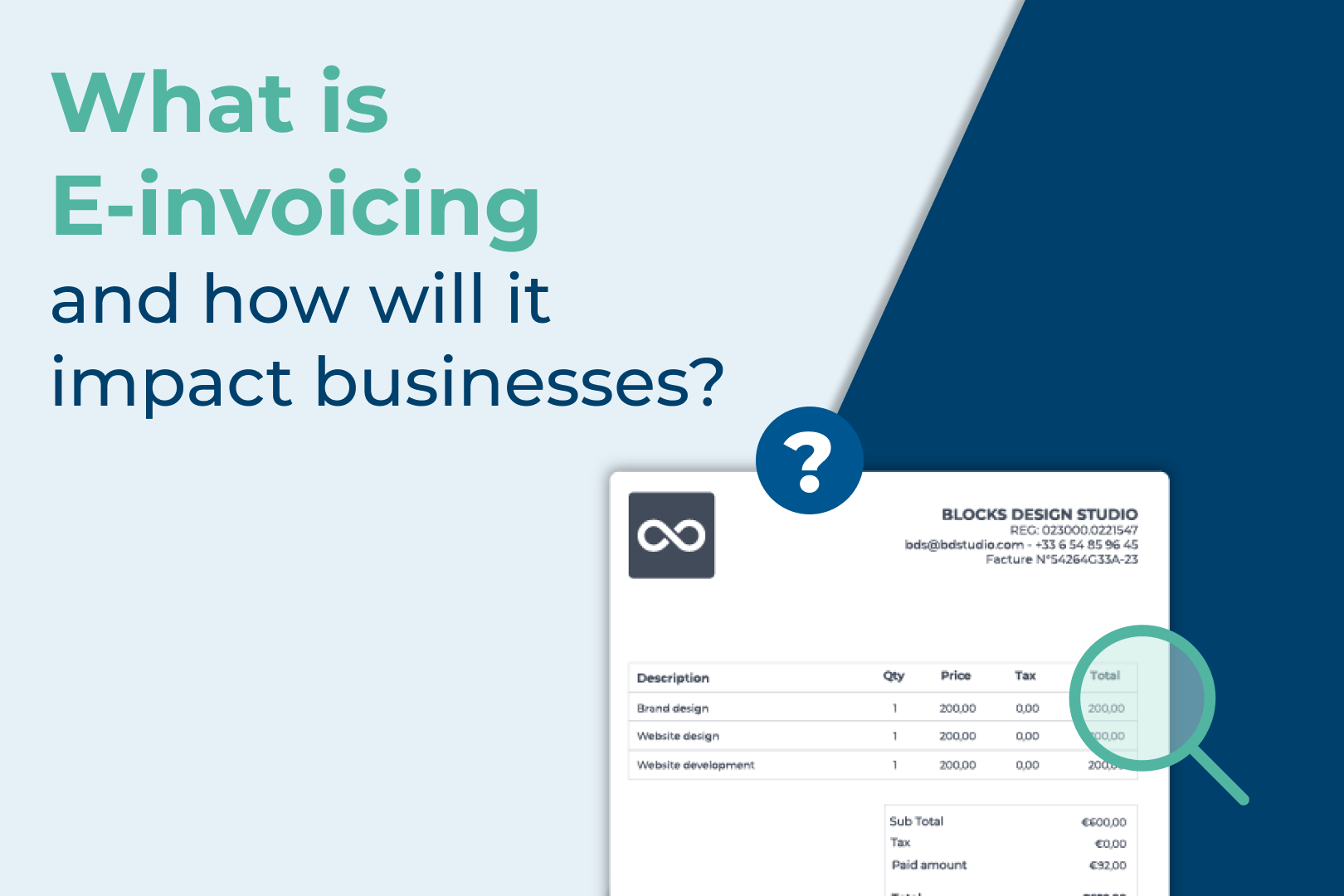
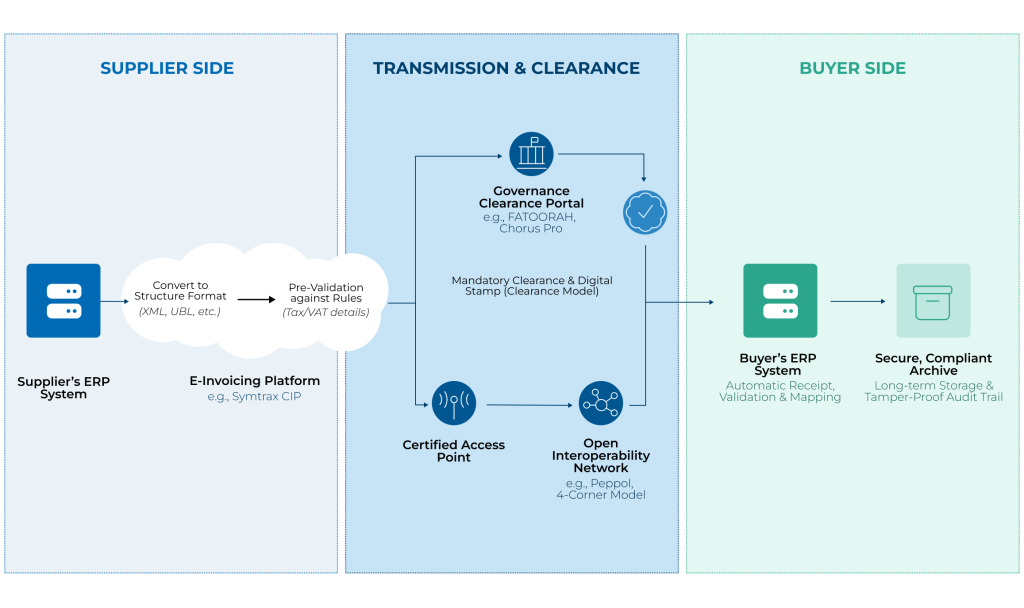
E-invoicing involves creating, exchanging, validating, and storing invoices in globally recognized structured formats (XML, UBL, EDIFACT, JSON, Peppol BIS Billing, ZUGFeRD/Factur-X, etc.) sent directly between suppliers’ and buyers’ financial systems. Unlike a PDF sent by email, a structured electronic invoice carries machine-readable fields (supplier name, invoice number, tax details, etc.) that systems can read and process automatically.
Before the structured invoice reaches the buyer, VAT and tax details are automatically validated against predefined rules. Any inconsistencies are flagged early, reducing rejections and follow-up queries. This leads to faster invoice acceptance, smoother downstream processing, and fewer disputes, allowing invoices to move into approval and payment cycles without delay. To support this, businesses need the right e-invoicing software.
Country-Wise E-Invoicing Regulations
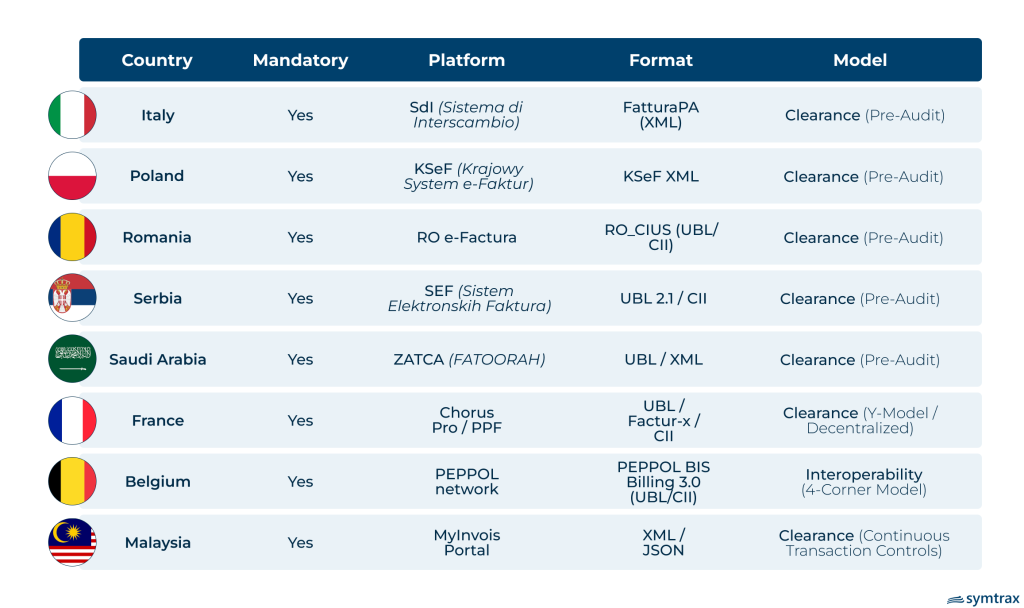
E-invoicing requirements vary by country, with governments defining specific formats, clearance models, and reporting obligations. For example, Saudi Arabia mandates e-invoicing through ZATCA, while the UAE and Oman are rolling out phased e-invoicing frameworks, alongside European countries such as France, Germany, Belgium, Poland, and Spain, with requirements taking effect from 2026. Understanding these regional requirements is essential for compliance.
What Global Trends Are Shaping the Move Toward E-Invoicing? And E-Invoicing Models
E-invoicing has been around for more than two decades, but its adoption has accelerated sharply over the past five years. More than 130 countries have introduced, or are actively developing, national e-invoicing frameworks with defined data standards and formats. More than 80 nations have already implemented e-invoicing mandates, ranging from early-stage adoption to fully mature ecosystems, while another 50 are developing new mandates.
The scale of this shift is massive: the global e-invoicing market was valued at USD 6 billion in 2024 and is projected to reach USD 36.72 billion by 2032.
As this shift accelerates, markets are focusing on standardized exchange models, ranging from direct exchange (the 2-corner model) to certified multi-network systems (the 4-corner model), to ensure consistent, secure invoice delivery. Open interoperability networks such as PEPPOL are becoming central to these models, enabling standardized B2B and B2G invoice exchange across borders and systems.
This global move toward structured data and interoperable networks is quickly becoming the non-negotiable foundation of modern invoicing. Worldwide, e-invoicing has transformed from an optional best practice into a mandatory digital compliance requirement across B2B, B2G, and selected B2C use cases.
Why E-Invoicing Matters?
- Government Mandates: The Digital Deadline
Government mandates are the primary drivers of this shift. Many countries now require e-invoices for B2B and B2G transactions. The UK government has confirmed a mandatory e-invoicing regime for all VAT-registered businesses, starting in April 2029. To remain trade-ready and ensure invoices are accepted, businesses must align with emerging e-invoicing regulations.
- Fraud Prevention: Secure and Streamline
E-invoicing reduces fraud by validating invoice data, authenticating senders, preventing tampering, and creating a transparent, auditable exchange process.
- Evolve Your Systems for Digital Maturity
E-invoicing is a clear marker of your company’s digital maturity. It requires organizations to switch from slow, paper-based workflows to fast, fully digital processes.
- Cost savings:
E-invoicing can reduce invoicing costs by up to 60–80% compared to paper-based processes. Savings come from eliminating paper, printing, postage, and physical storage and reducing labor associated with manual handling, validation, and data entry.
The Real Impact of E-Invoicing on Business
Adopting e-invoicing delivers measurable business impact across finance, operations, and compliance.
- Operational efficiency and security
Automation of invoice capture and intelligent matching cuts processing time and manual touchpoints. Encrypted transmission and tamper-proof audit trails ensure invoice integrity, simplify audits and regulatory reporting, and reduce the risk of fraud.
- Compliance and transparency
E-invoicing creates real-time, tamper-proof audit trails and enforces data validation, helping you comply with evolving regulations and avoid penalties. Structured records simplify tax reporting and increase transparency with customers and suppliers.
- Faster Cash Flow
Automated delivery and instant validation speed the invoice-to-cash cycle: invoices are sent and accepted faster, and payment windows shrink, reducing Days Sales Outstanding (DSO) and improving cash flow.
- Stronger client relationships
Faster, accurate invoicing and clearer reporting shorten billing cycles and reduce disputes. Providing timely invoices improves customer satisfaction and supports predictable payments.
The Path Forward: How Should Businesses Prepare?
Switching to e-invoicing is more than a software update. It changes how invoices are created, transmitted, and converted into cash. The transition requires new processes, technical setup, and staff training, but the improvement in speed, accuracy, and compliance makes it worthwhile.
Follow this practical roadmap.
- ERP integration:
Verify that your ERP can generate and accept structured invoice formats (XML, UBL, etc.), and map the necessary fields, test posting, and ensure that no manual input is required.
- Choose an e-invoicing solution:
Select an integrated e-invoicing solution that automates invoice creation, performs validation, manages compliant archiving, uses secure transmission protocols, and connects seamlessly to interoperability networks (for example, PEPPOL) and government portals.
- Prepare compliance prerequisites:
Ensure clean master data (e.g., VAT numbers, legal addresses) and enforce validation rules and security controls to support tamper-proof invoicing.
- Select a connection model:
Choose direct, intermediary, or an open network like PEPPOL, based on cost, scalability, and regulatory requirements.
- Pilot and validate
Run a pilot with a small group of buyers. Test end-to-end invoice delivery, validation, posting, and exception handling, while measuring DSO and exception rates.
- Scale with invoice templates:
Adopt standardized, compliant invoice templates that are ready for expansion. This ensures your e-invoicing system can scale efficiently as the business grows across regions, trading partners, and regulatory environments, while maintaining consistency and compliance.
Conclusion: Simplify E-Invoicing with One Scalable Platform
The Compleo Invoice Platform (CIP) by Symtrax consolidates all your e-invoicing needs into a single solution. CIP integrates seamlessly with any ERP, such as SAP, IBM, Oracle, or Microsoft, and more, via certified connectors or APIs, eliminating the need for major software overhauls. It automatically converts your invoice data into compliant formats and securely sends invoices to global platforms and networks such as FATOORA, Chorus Pro, and the PEPPOL network via certified access points. By centralizing compliance and providing real-time visibility, CIP turns regulatory requirements into a streamlined, automated advantage.
Book a Demo with Symtrax and prepare your finance operations for scalable, compliant e-invoicing.
FAQs
- What is the difference between a digital invoice and an e-invoice?
A digital invoice can be a simple PDF sent via email. An e-invoice is a structured data file (like XML) that is created, transmitted, and received for automatic processing by ERP, and in many countries, it must also be sent through a government or certified e-invoicing software.
- Do I need to replace my current ERP to adopt e-invoicing?
No. With Symtrax CIP, you can integrate e-invoicing capabilities directly with your existing ERP without replacing your core software.
- What are e-invoicing mandates?
An e-invoicing mandate is a regulatory requirement imposed by a government or a governing body that mandates electronic invoicing systems for businesses. It specifies that businesses must generate, transmit, and receive invoices in a structured, electronic format instead of traditional paper-based invoices and PDFs.
- What is an e-invoicing solution?
An e-invoicing solution is a software platform that automates the creation, exchange, and compliance of electronic invoices. It should connect with government portals (like FATOORA or Chorus Pro) and trading networks (like PEPPOL) to ensure your invoices are delivered securely and in the correct legal format.
- What should I look for in e-invoicing software or a platform?
Choose software that ensures regulatory compliance, integrates easily with your ERP, scales across countries and volumes, and supports secure data exchange. It should automate invoice validation and processing, protect data with strong security controls, and provide clear reporting for audits, monitoring, and performance tracking.